HR Hub Insights: What Support Do HR Professionals Really Need?

At our April HR Hub, we were joined by Dr Jo Burrell, Clinical Psychologist and Co-Founder of Ultimate Resilience, for a powerful and thought-provoking session on the realities of working in HR.
Drawing on data from the 2026 HR Mental Wellbeing Survey, Jo shared the most comprehensive picture to date of HR wellbeing, and the findings were striking.
The Reality Behind the Role
The data highlighted the scale of pressure facing HR professionals today:
- 74% report symptoms of low mood or depression
- 62% are experiencing burnout, with a further 12% at risk
- 73% report symptoms of anxiety
These figures are significantly higher than the general population, reinforcing a key point from the session: HR professionals are carrying a substantial emotional and organisational load.
What’s Driving the Pressure?
The survey identified three primary drivers:
- Excessive workloads (52%)
- Poor management or lack of alignment (40%)
- Lack of support (25%)
As Jo highlighted, HR teams are often expected to absorb organisational pressure while continuing to deliver at pace, with limited space to process the emotional impact of the work.
What Support Do HR Professionals Need Most?
During the session, we asked our HR Hub community to share what support would make the biggest difference.
The responses were clear and consistent.
At the centre of the discussion was leadership-level support and backing from the executive team.
Alongside this, other key themes emerged:
- Emotional support and the opportunity to offload
- Coaching, supervision, and guidance
- Clear communication and expectations
- Feeling heard, valued, and understood
- Better workload management and realistic expectations
The word cloud reinforced a critical insight:
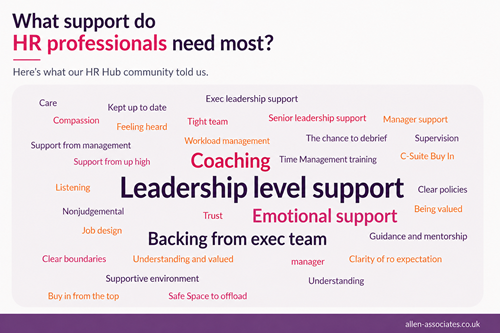
Support isn’t just about benefits or policies; it’s about culture, leadership, and day-to-day experience.
From Awareness to Action
A key takeaway from Jo’s session was the need to move beyond awareness and towards structured, proactive support.
This includes:
- Recognising the emotional impact of HR roles
- Actively reducing avoidable strain (e.g. workload, last-minute change)
- Embedding consistent support systems such as coaching, supervision, and peer networks
As Jo described, effective organisations are not just helping HR professionals cope; they are creating environments where they can operate sustainably and perform at their best.
You can download the 2026 report here:

Final Thoughts
This session gave our HR Hub community an opportunity to reflect, share experiences, and sense-check their own approach.
The message was clear - supporting HR professionals is not optional, it’s essential for organisational performance, resilience, and long-term success.
Thank you to everyone who joined us and contributed to the discussion.